

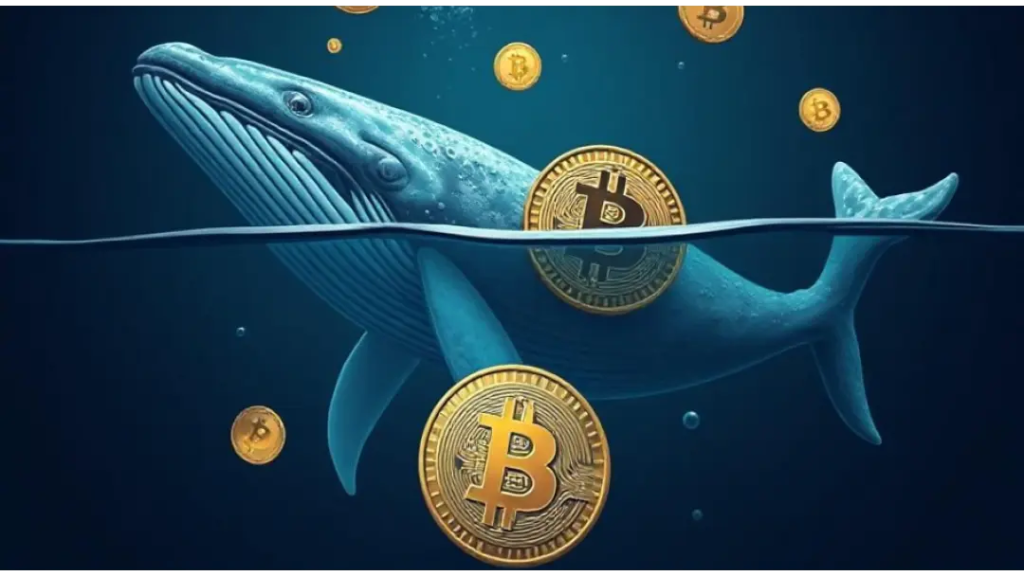
What are crypto whales?
Crypto whales are individuals or institutions that hold a significant amount of a specific cryptocurrency. While there is no strict definition, in Bitcoin’s case, holding around 1,000 BTC or more is commonly considered “whale-level.”
What matters is not the exact number, but the impact:
when a single entity controls a large share of supply, its actions can move the market.
How do whales affect prices?
Because of their size, whale transactions can directly influence price movements.
- Large selling can increase supply and push prices down
- Large buying can reduce available supply and drive prices up
In smaller or less liquid markets, even a single whale transaction can trigger sharp volatility. This is why sudden price spikes or drops are often linked to whale activity.
Impact on liquidity and market structure
Whales don’t just move prices — they shape liquidity.
If a large portion of a token is held by a few wallets and not actively traded, market liquidity becomes thinner. This creates a fragile environment where:
- prices react more aggressively
- spreads become wider
- smaller traders face higher execution risk
In extreme cases, markets can be easily manipulated.
Why traders monitor whale activity
Crypto markets are transparent by design, which means large wallet movements can be tracked on-chain.
As a result, many traders follow whale behavior to anticipate market trends. Tools and platforms monitor:
- large transfers to exchanges (potential selling)
- accumulation patterns (potential bullish signals)
However, it’s important to understand:
whale tracking is not a prediction tool — it’s just one piece of market context.
Whales and governance power
In Proof of Stake (PoS) networks, whales often have additional influence beyond trading.
Since voting power is usually tied to token holdings, large holders can:
- influence protocol decisions
- vote on upgrades
- shape the future of the network
This creates a trade-off between decentralization and efficiency, especially in newer ecosystems.
Conclusion
Crypto whales are a natural part of the market, but they introduce both opportunity and risk.
For traders, understanding whale behavior is less about chasing moves and more about recognizing how market structure works — especially when it comes to liquidity, volatility, and execution costs.
If you want to better understand how trading costs, spreads, and platform differences affect your real outcomes, you can explore:
https://www.btcbj.com/brokerage-reviews/