
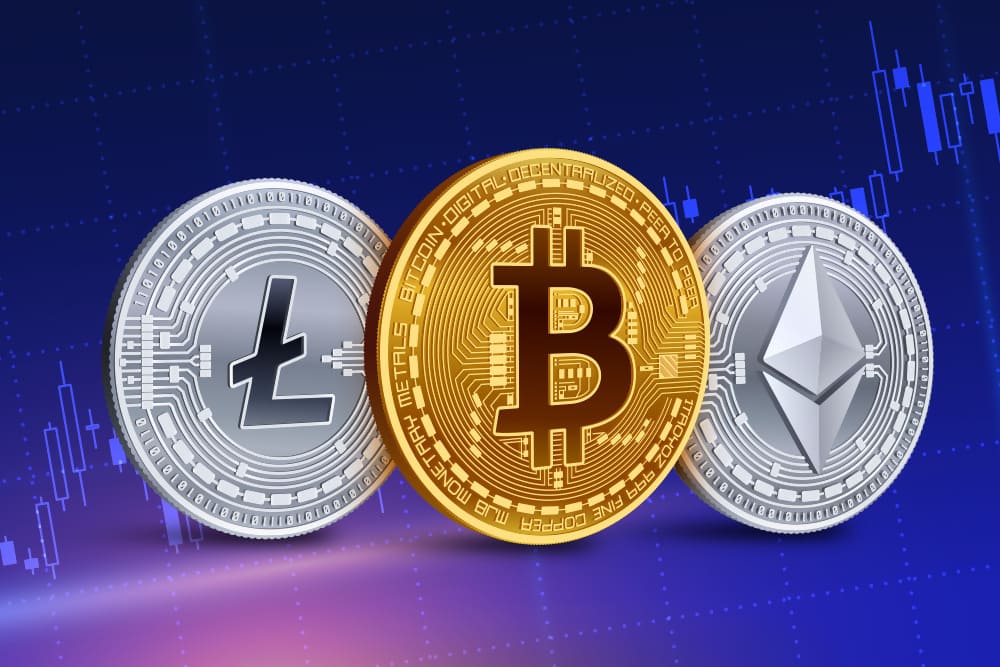
In 2026, the cryptocurrency market has matured beyond its speculative “wild west” beginnings. Today, it is a multi-trillion-dollar asset class dominated by two giants that serve completely different purposes.
To build a balanced portfolio, you must understand the distinction between Digital Property (Bitcoin) and Digital Infrastructure (Ethereum).
## Part 3: The 2026 Market Leaders
Digital Gold vs. The Global Computer
### 1. Bitcoin (BTC): The Digital Gold Standard
As of January 2026, Bitcoin remains the undisputed king with a market cap nearing $2 Trillion. It has officially transitioned from a “risky experiment” to a cornerstone of institutional treasuries.
-
The Core Thesis: Scarcity. There will only ever be 21 million Bitcoins. In a world of persistent inflation and currency debasement, Bitcoin is viewed as the ultimate hedge—the “Digital Gold.”
-
2026 Milestone: The success of Spot Bitcoin ETFs has allowed pension funds, 401ks, and sovereign wealth funds to hold BTC. It is now treated as a stabilizing digital commodity rather than a speculative gamble.
-
Your Role for BTC: Think of this as your “Savings Account” for the next decade. It’s meant to preserve your purchasing power.
### 2. Ethereum (ETH): The Global Computer
If Bitcoin is gold, Ethereum is electricity. It is the infrastructure upon which the rest of the crypto economy is built.
-
The Core Thesis: Utility. Ethereum isn’t just a currency; it’s a programmable network. It uses Smart Contracts to power Decentralized Finance (DeFi), NFT marketplaces, and tokenized real-world assets.
-
2026 Milestone: Ethereum has successfully scaled through Layer 2 solutions (like Arbitrum and Base), making transactions nearly instant and costing only fractions of a cent. Major banks like JPMorgan now use Ethereum-based tech to settle collateral.
-
Your Role for ETH: Think of this as your “Growth Stock.” Its value is tied to how many people and businesses are building apps on its network.
### 3. 2026 Market Snapshots (Approximate Data)
| Feature | Bitcoin (BTC) | Ethereum (ETH) |
| Market Role | Store of Value (Property) | Smart Contract Platform (Utility) |
| Max Supply | Capped at 21 Million | No hard cap (Inflation/Deflation balance) |
| Price (Jan 2026) | ~$93,000 | ~$3,200 |
| Transaction Use | Large value transfers / Savings | Daily DeFi use / App fees (Gas) |
### 4. The Emerging “Silver” & Stablecoins
While BTC and ETH lead, the 2026 market also relies on:
-
Solana (SOL): The “High-Speed” alternative to Ethereum, favored for consumer apps and gaming.
-
Stablecoins (USDT/USDC): Digital dollars that stay at $1.00. In 2026, these have become the “Internet’s Dollar,” used for global payments and cross-border trade without the volatility of BTC.
💡 Lesson 3 Action Item
Compare the charts: Look at the price of BTC and ETH over the last year. You will notice that while they often move together, ETH tends to be more volatile (higher highs, lower lows) because it is a “technology” play, while BTC acts as the “anchor” of the market.